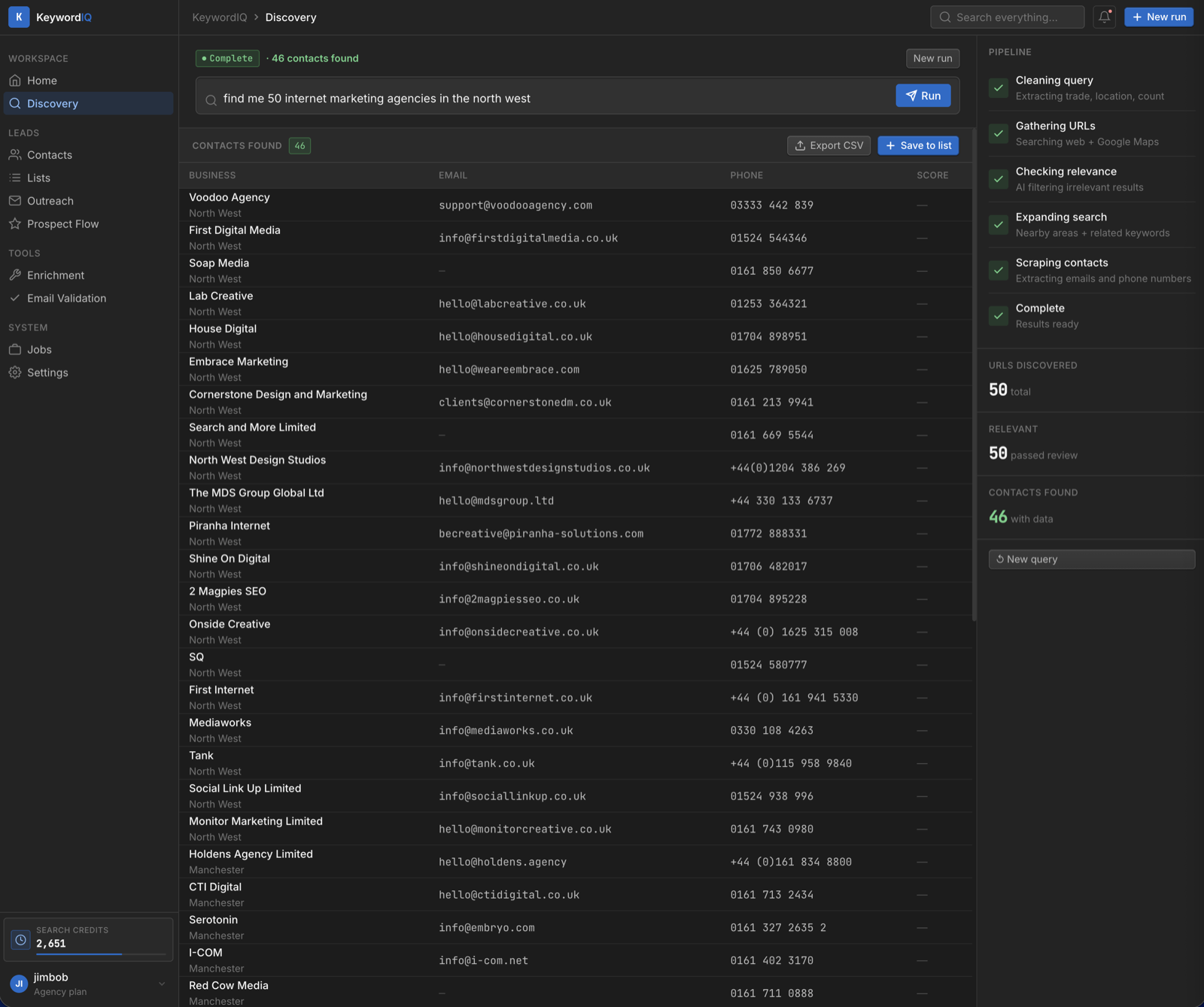
Web scraping for lead generation can be powerful because it helps teams work from fresher public web data instead of stale snapshots. For agencies, that often means better visibility into real business websites, better qualification context, and less dependence on bought lead lists.
But scraping is not automatically good just because it is fresh. The benefits only materialize when the workflow is selective, quality-aware, and grounded in public information that is actually useful for prospecting. Otherwise, teams just move from one noisy source to another.
The main benefits
The biggest benefit of scraping is freshness. Public business websites change constantly. Contact routes change. Service pages change. Geographic focus changes. If your prospecting depends on those signals, live web discovery can beat older databases.
Scraping can also improve qualification because it lets you inspect the evidence behind a lead. A business website often tells you far more about offer fit than a generic list record.
For agencies, the most practical benefits are:
- fresher lead inputs
- better visibility into website quality
- easier local-market discovery
- stronger context before outreach
This is closely related to the broader argument in fresh web data vs static lead databases.
The main risks
The risks are usually not technical first. They are workflow and quality risks first.
Common mistakes include:
- scraping too broadly and drowning the team in low-fit records
- collecting data without a clear qualification model
- ignoring whether the public information is actually useful for outreach
- treating scraped output as finished without review
There are also compliance and operational considerations. Public data still needs to be handled responsibly, and teams need to stay aligned with their legal and ethical standards. Scraping is a method, not an excuse to abandon judgment.
When scraping makes sense
Scraping makes the most sense when you need live discovery and website-backed qualification. It is especially useful when the signal you care about is visible on the public web and difficult to trust in a static list.
That is why scraping fits well into products like lead generation software for agencies when the goal is local business prospecting. It is less about collecting everything and more about discovering the right businesses faster.
FAQ
Is web scraping always better than buying leads?
No. It is better when freshness and website context matter. It is worse when the team has no qualification model or no process for turning results into action.
Can web scraping replace lead databases entirely?
Not for every team. Some workflows benefit from both. The important question is which source gives your team the strongest signal for the market you are targeting.
Why do agencies care about scraping?
Because agencies often sell services that depend on visible business problems. Public web signals can make those problems much easier to spot.